
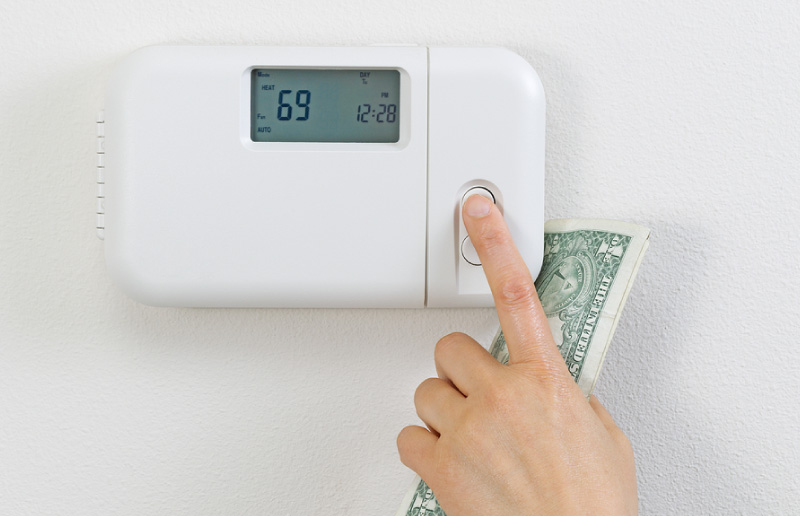
Every summer in Kansas City tells the same story. The temperatures climb into the 90s, the humidity sticks around overnight, and your cooling system runs longer just to keep up. Most homeowners respond the same way: they lower the thermostat. And every month, the energy bill climbs right along with it.
The U.S. Department of Energy estimates that heating and cooling represent the single largest share of home energy use, and that under-insulated, leaky homes waste a meaningful percentage of that energy as it escapes through attics, walls, and gaps in the building envelope. The University of Missouri Climate Center has documented that summer minimum (overnight) temperatures across the state have been trending warmer in recent decades, which means cooling systems get less of a nighttime break than they used to. Kansas City sits in IECC Climate Zone 4A (mixed-humid climate). The City of Kansas City adopted the 2021 IECC effective July 1, 2023, so any home built or substantially remodeled after that date should already meet the 2021 minimums — but most existing homes do not.
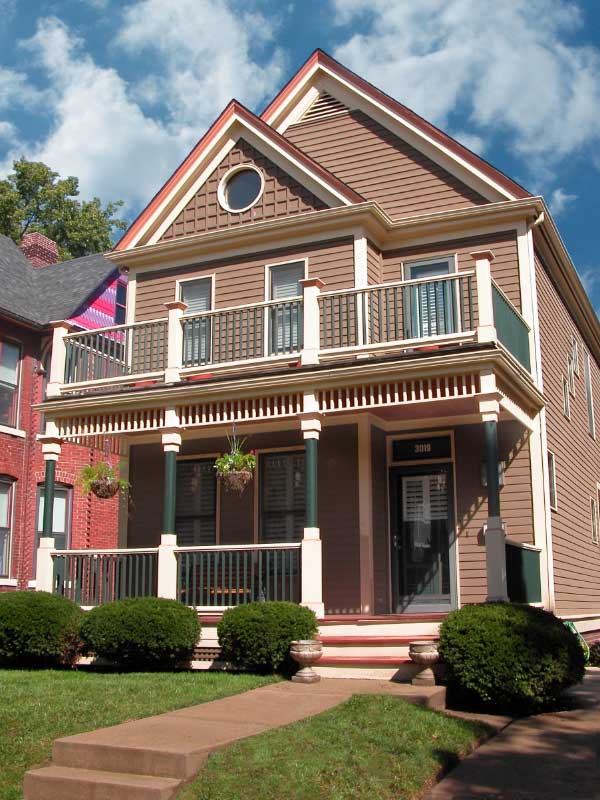
The most effective way to lower summer energy bills in Kansas City comes from a layered approach: set the thermostat to about 78°F when home and 7–10°F higher when away, run ceiling fans counterclockwise so you can raise the thermostat about 4°F without losing comfort, cover sun-facing windows during peak heat, run kitchen and bath exhaust fans (vented to the outside) to pull humidity out, seal air leaks at the attic plane and rim joists, and bring attic insulation up to ENERGY STAR–recommended levels for Climate Zone 4A.
If your cooling bills climb every summer, no matter how low you set the thermostat, the issue is almost always the building envelope, not the equipment — and an energy evaluation can pinpoint exactly where the energy is going.
Start with the Free Stuff — Thermostat, Fans, and Windows
Start with the changes you can make today. These cost nothing, and their impact will show up on your next bill.
Thermostat settings matter more than you think. The U.S. Department of Energy recommends setting your thermostat to a comfortable level when you’re home and raising it by 7–10°F when you’re away or asleep. That alone can save up to 10% a year on cooling and heating. One thing to avoid: cranking the thermostat lower when you get home. Your system doesn’t cool faster — it just runs longer. Consider using a programmable thermostat for easy, effortless temperature control.

Use ceiling fans the correct way. Your ceiling fan direction in the summer matters. Running ceiling fans counterclockwise in summer creates a wind-chill effect, allowing a homeowner to raise the thermostat setting by about 4°F without sacrificing comfort. But don’t forget: fans cool people, not rooms. Turn them off when you leave.
Block heat before it gets inside. Window coverings are one of the simplest ways to reduce solar heat gain. In Kansas City, south- and west-facing windows take the biggest hit, especially from late morning through the evening. Closing blinds or curtains during peak heat can noticeably reduce indoor temperatures.
These actions should be the first steps you can take to a cooler home. They’re immediate, simple, and effective.
Stop Paying to Cool the Outdoors — Air Sealing
The next step is fixing where your home is losing energy. Every gap in your home’s structure is an open door. Cool, conditioned air escapes, and hot, humid Kansas City air comes right back in. That constant exchange forces your HVAC system to work harder than it should. The DOE notes that air sealing should accompany any insulation upgrade for best results.
This is where professional air sealing comes in. Sealing those gaps is one of the highest-impact upgrades you can make, especially when paired with insulation. ENERGY STAR’s methodology for combined sealing and insulating projects estimates an average savings of 15% on heating and cooling costs (or about 11% on total energy costs) when homeowners air-seal and add insulation in attics, floors over crawl spaces, and basements, leading to higher HVAC efficiency and reducing home cooling costs.
The most common problem areas are:
- Recessed lighting in ceilings
- Plumbing and electrical penetrations into the attic
- Attic hatches and access points
- Dropped soffits above cabinets
- Basement rim joists
If you want a quick place to check, start there — or even check your basement rim joists, where many homes leak the most.
Also, don’t overlook humidity. Running kitchen and bath exhaust fans during cooking or showers helps remove warm, moist air — as long as those fans vent outside, not into the attic.
Insulation — The Long-Term Play for Kansas City Summers
If air sealing stops energy loss, insulation slows heat transfer. And in Kansas City summers, that matters more than most homeowners realize.
Picture your attic in July. It’s essentially a heat trap sitting directly above your living space. Without enough insulation, that heat radiates downward all day, forcing your AC to keep fighting it.
Kansas City sits in IECC Climate Zone 4A. For existing homes, ENERGY STAR recommends the following for attic insulation:
- Around R-49 in attics that have 3–4 inches of existing insulation
- Around R-60 in attics with no insulation
- Around R-19 to R-25 for floors over unconditioned spaces
If your home falls short of those levels, you’re working against the climate. The DOE’s Energy Saver guide is clear that the R-value needed depends on climate zone, the part of the house being insulated, and the existing condition.
Upgrading to proper levels through attic insulation services helps reduce heat flow, lowers cooling demand, and keeps indoor temperatures more stable throughout the day.
Still Paying Too Much? Get an Energy Audit
If you’ve handled the basics and your bills are still high, guessing won’t get you far.
A professional home energy audit gives you a clear answer. It typically includes a blower-door test to measure how much air your home leaks, infrared imaging to identify missing or compressed insulation, and a written report showing exactly where to focus.
It’s the fastest way to stop throwing money at the wrong fixes and start solving the real problem.
The most effective way to lower cooling bills in Kansas City is simple: start with behavior changes, move into sealing and insulation, and use an audit if the numbers still don’t make sense.
Kansas City’s hot, humid summers aren’t going anywhere. But with the right approach, your energy bills don’t have to climb with them.
If you’re ready to find out where your home is losing energy and what will actually fix it, the next step is scheduling a free in-home estimate.
References:
ENERGY STAR. “Methodology for Estimated Energy Savings from Sealing and Insulating.” U.S. Environmental Protection Agency, www.energystar.gov/saveathome/seal_insulate/methodology.
ENERGY STAR. “Recommended Home Insulation R–Values.” U.S. Environmental Protection Agency, www.energystar.gov/saveathome/seal_insulate/identify-problems-you-want-fix/diy-checks-inspections/insulation-r-values.
National Weather Service Kansas City / Pleasant Hill. “Kansas City Records and Normals.” National Oceanic and Atmospheric Administration, U.S. Department of Commerce, www.weather.gov/eax/kcrecnorm.
U.S. Department of Energy. “Fans for Cooling.” Energy Saver, www.energy.gov/energysaver/fans-cooling.
U.S. Department of Energy. “Insulation.” Energy Saver, www.energy.gov/energysaver/insulation.
U.S. Department of Energy. “Spring and Summer Energy-Saving Tips.” Energy Saver, www.energy.gov/energysaver/spring-and-summer-energy-saving-tips.
U.S. Department of Energy. “Thermostats.” Energy Saver, www.energy.gov/energysaver/thermostats.