
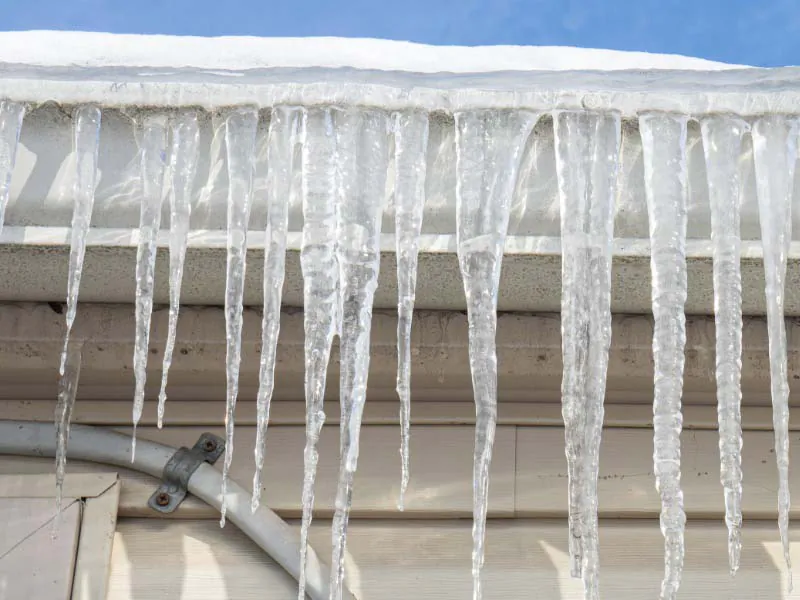
Icicles forming on the roof may seem like a normal part of winter in Kansas City. But if you notice thick ridges of ice forming along the eaves every year, the problem might not be your roof or gutters.
Repeated ice dams in Kansas City can allow water to back up under shingles, leak into the house, stain ceilings, and damage insulation. Each new freeze-thaw roof damage cycle can bring these problems back again.
The cause often begins beneath the roof.
Ice dams form when heat escapes from your living space through attic air leaks, warming the roof deck and melting the snow above.
The melted water flows to the colder eaves and refreezes. As that cycle repeats, the ice ridge gets bigger.
That means ice dam prevention starts by air sealing the attic floor and the pathways that let warm indoor air reach the roof, not assuming the roof needs work.
Knowing where these leaks happen can help Kansas City homeowners fix the source of the problem before the next winter arrives.
How Ice Dams Actually Form on Kansas City Roofs
The Melt-Refreeze Cycle
Ice dams need three things to form: snow, freezing temperatures, and an attic that isn’t well sealed or insulated. Just a couple of inches of snow on the roof can be enough to start the process.
So, why do ice dams form? Warm air from the house escapes into the attic and heats the underside of the roof deck. That heat melts the snow sitting above it. Meltwater then travels down the roof slope until it reaches the colder eaves, where it freezes.
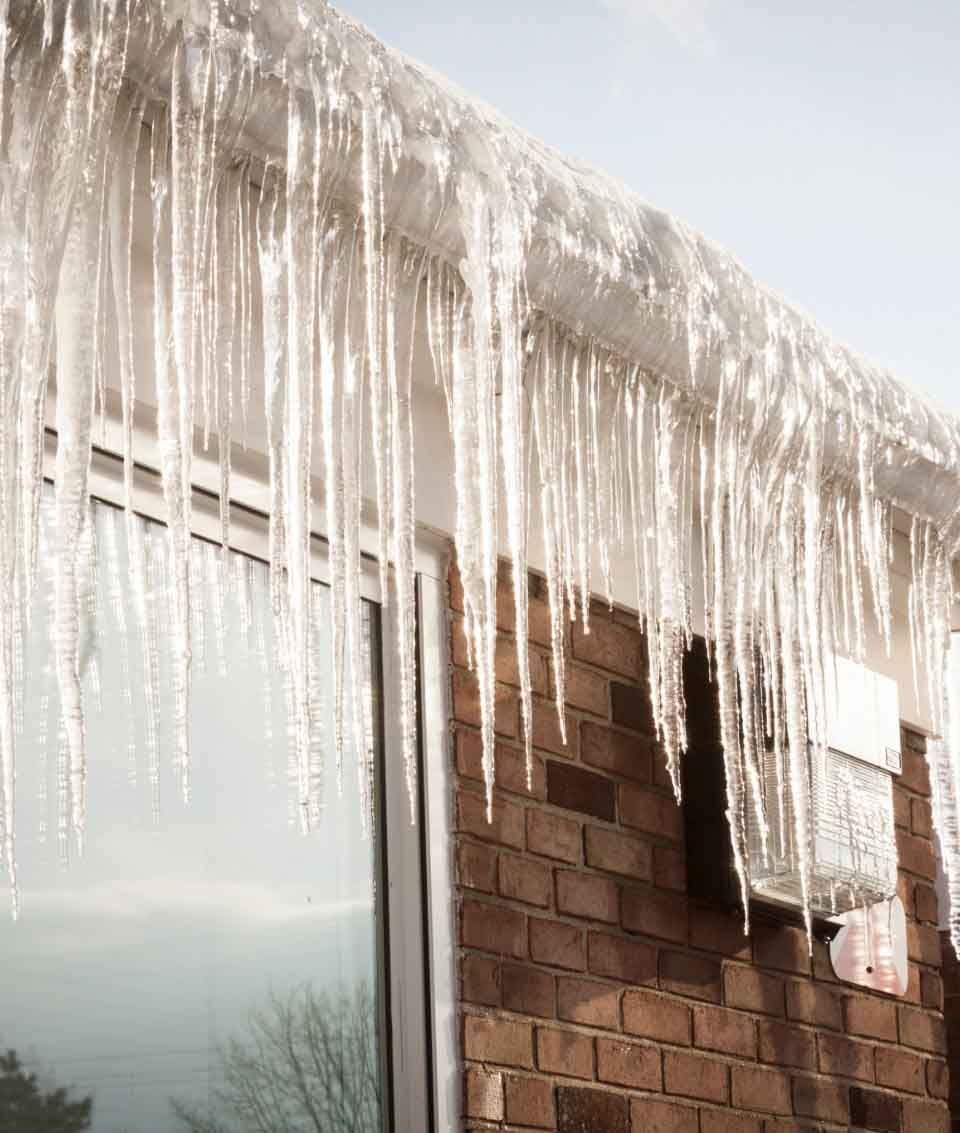
This process continues. As more snow melts, more water runs down to the eaves and creates more ice. Over time, this ridge can block water from draining off the roof. If water gets trapped, it can leak under the shingles and damage the roof sheathing, ceilings, or walls.
A properly sealed and insulated attic helps limit the heat reaching the roof deck. That’s why attic insulation services address both insulation and air leaks that allow conditioned air to escape into the attic.
Why KC’s Freeze-Thaw Winters Make It Worse
Kansas City sits in IECC Climate Zone 4A, a mixed-humid climate zone. Climate zones are assigned by county, and Jackson, Clay, and Cass counties all fall within Zone 4A.
Unlike climates where winter temperatures stay far below freezing for long periods, Kansas City temperatures often move above and below freezing. This creates conditions for repeated melting and refreezing. When the roof warms, snow melts, and water moves toward the eaves. If the temperature drops again, the water freezes. These cycles keep building up the ice dam instead of leaving one stable layer of ice in place.
For homeowners, the ice along the roof edge is the visible result, but the real question is what allowed so much heat to reach the roof in the first place.
Ice Dams Are an Air-Leak Symptom, Not a Roof Problem
Common Attic Bypass Points
Warm air doesn’t need a big opening to get into the attic. It can slip through small gaps and holes in the ceiling.
Common attic bypasses include gaps around:
- Electrical wiring
- Recessed light fixtures
- Plumbing stacks
- Furnace flues and chimneys
- Attic hatches
- Dropped ceilings and soffits
- Top plates
- Exhaust fan housings
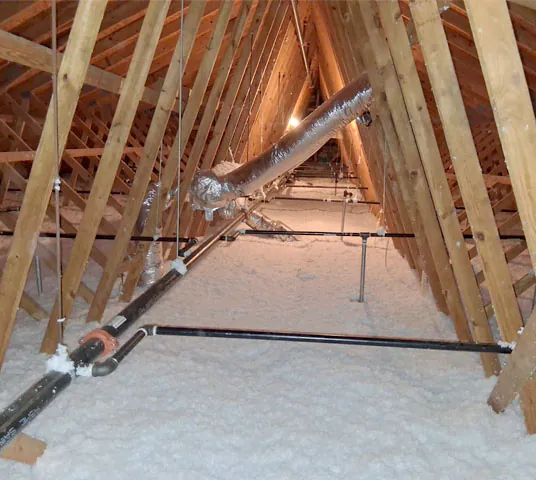
Several of these areas are easy to overlook because they’re hidden once the house is finished. A ceiling may look solid from below, but openings above it can let heated air move into the attic.
Professionals often check for leaks around light boxes, plumbing stacks, and soffit drops when they inspect an attic for uncontrolled airflow.
Why Roofing, Gutters & Ventilation Alone Don’t Fix It
When ice collects at the roof edge, homeowners often check the shingles, gutters, or attic vents first. However, ice dams are often misdiagnosed as problems with these parts. The real problem is warm air leaking into the attic. Adding roof vents, replacing shingles, or cleaning gutters won’t seal the gaps that let heated air escape into the attic.
The most important step is to stop warm air from moving through the ceiling into the attic, rather than relying on ventilation or roof work to solve the problem. Fiberglass and cellulose insulation can slow heat transfer, but fibrous insulation does not create an air barrier on its own. Warm air can still move through gaps and penetrations unless you seal those areas first. Professional air sealing services focus on closing those leaks so heated air stays inside your home instead of escaping into the attic.
In short, fixing the roof might repair damage caused by an ice dam, but it won’t necessarily solve the problem that caused the dam in the first place.
The Air-Seal-First Fix for Under-Insulated Attics
Step 1 — Air Seal Before You Insulate
The sequence is important.
First, seal the pathways that allow heated indoor air to reach the attic. Once you close those attic bypasses, insulation can work over a continuous air barrier instead of sitting on top of uncontrolled leaks.
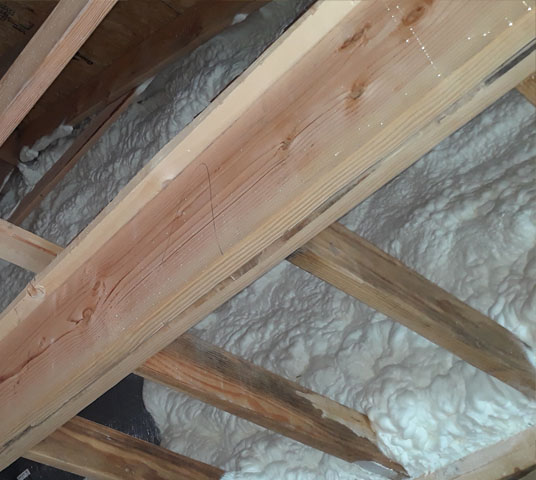
Depending on the area being treated, spray foam attic air sealing can close gaps and add insulation at the same time. As it’s applied, spray foam insulation expands to create an air barrier and an insulating layer. The goal is to keep warm indoor air from reaching the underside of the roof.
Step 2 — Add Sufficient, Continuous Insulation
After sealing air leaks, the next step is ensuring the attic has enough continuous insulation to slow heat transfer.
An under-insulated attic can still let too much household heat reach the roof deck, even after you address obvious air leaks. Blown-in fiberglass and cellulose are common options for adding insulation across the attic floor after sealing.
Every home is different, so don’t assume one insulation depth or R-value applies in each case. A professional can check for spots where insulation is thin, missing, settled, or not working as it should.
Homeowners who notice uneven insulation or suspect their attic isn’t adequately insulated can review How to Tell If Your Attic Needs More Insulation before scheduling an evaluation.
Step 3 — Confirm the Fix Reduces Energy Loss
Air sealing and insulation do more than address winter roof problems. Homeowners can save an average of about 15% on heating and cooling costs by air sealing their homes and adding insulation in attics, floors over crawl spaces, and basements. A better sealed and insulated attic can also reduce the chance of ice dams forming in snowy weather.
A professional energy audit in Kansas City before winter can help locate air leakage and identify areas that need attention. An attic inspection can also confirm that bypasses are fully sealed by winter and that insulation provides continuous coverage.
The goal is to keep household heat where it belongs, not letting it escape into the attic and warm the roof.
FAQ
When homeowners do attic air sealing in Kansas City before winter, they address those leaks at the source. After that, adding enough insulation helps keep heat away from the roof deck and reduces both energy loss and the risk of ice dams.
If ice dams return whenever Kansas City temperatures move through another freeze-thaw cycle, schedule an attic air-sealing and insulation inspection with The Hayes Company. A free consultation can help identify where heat is escaping and what to address before the next winter freeze.
References
Building America Solution Center. “Attic Air Sealing, Insulating, and Ventilating for Ice Dam Prevention.” U.S. Department of Energy, Pacific Northwest National Laboratory, 30 Sept. 2021, basc.pnnl.gov/information/attic-air-sealing-insulating-and-ventilating-ice-dam-prevention.
Minnesota Department of Commerce. “Got Ice Dams? Learn What to Do and How to Prevent Them to Save Energy.” Minnesota.gov, 25 Feb. 2019, mn.gov/commerce/energy/conserving-energy/energy-tips/index.jsp?id=17-373292.
Massachusetts Department of Energy Resources. “What Are Ice Dams?” Mass.gov, mass.gov/doc/ice-dams/download.
Open Energy Information. “Climate Zone 4A.” National Renewable Energy Laboratory, U.S. Department of Energy, openei.org/wiki/Climate_Zone_4A.
U.S. Department of Energy, Office of Scientific and Technical Information. “Guide to Determining Climate Zone by County: Building America and IECC 2021 Updates.” OSTI.GOV, 2022, osti.gov/biblio/1893981.
U.S. Environmental Protection Agency. “Why Seal and Insulate?” ENERGY STAR, energystar.gov/saveathome/seal_insulate/why-seal-and-insulate.