
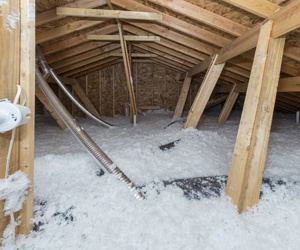
Most homeowners assume their attic insulation is doing its job. But even if your home is relatively new, it may not have enough attic insulation. Building codes change over time, and insulation can settle or shift. This means your original insulation may not meet today’s recommendations.
So, how do you know if your attic needs more insulation?
Kansas City is in IECC Climate Zone 4A. ENERGY STAR now recommends R-60 attic insulation for an uninsulated attic, and R-49 if 3 to 4 inches is already present. The old 12-inch, or R-38, benchmark is outdated, and today’s target is much higher.
If your attic is under-insulated, your home may use more energy for heating and cooling during Kansas City’s hot summers and cold winters. You can check your attic yourself to see how it compares with current recommendations. If you are unsure about your results, a no-pressure professional home energy audit can help.
Kansas City’s Attic Insulation Targets Have Changed
Why the Old 12-Inch Rule Is Outdated
For years, 12 inches of insulation, or R-38, was a common benchmark for attics. This older rule, however, no longer matches today’s recommendations for Climate Zone 4A insulation.
Kansas City updated its energy code in 2023 and now follows the 2021 IECC with local amendments.
The 2021 IECC Kansas City energy code reflects the city’s place in Climate Zone 4A. That means an attic that met older insulation guidelines may no longer meet today’s recommendations.
Current Zone 4A Targets
ENERGY STAR recommends R-60 attic insulation if an attic has no existing insulation. If your attic already has 3 to 4 inches, R-49 is the target. This guidance is based on the residential provisions of the 2021 IECC.
Depth vs. R-Value
Insulation depth and R-value are connected, but they are not the same thing. R-value measures how well insulation resists heat flow, and each material has its own R-value per inch. Two attics with the same attic insulation depth may therefore provide different levels of insulation.
To determine the attic insulation R-value a Kansas City home needs, check the type of insulation and its thickness. Look at the product label or the material’s rated R-value per inch instead of relying on one standard depth for every attic.
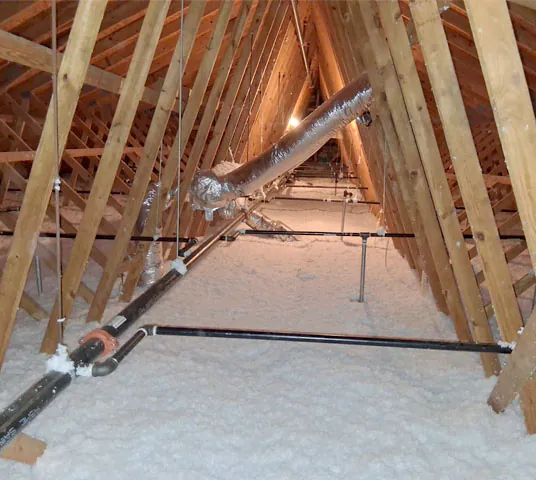
Loose-fill insulation can become thinner over time. Because blown-in insulation settling reduces its installed depth, even an attic that was properly insulated in the past may need to be measured again.
For more information about different attic insulation methods, see our separate guide to the available options.
The Updated Ruler Test: How to Check Your Attic
Step-by-Step DIY Check
For a simple attic insulation inspection, grab a flashlight and a ruler or tape measure. Take measurements in several areas.
- Find every attic access point. If your home has multiple rooflines, it may have separate attic sections that need to be checked individually.
- Step only on joists or sturdy boards and avoid disturbing the insulation.
- Measure the attic insulation depth in several places, not just near the attic hatch.
- Compare the insulation with the tops of the floor joists. If it sits level with or below the joists, you probably need more insulation.
- Identify the insulation type. Thickness alone won’t tell you the attic’s total R-value.
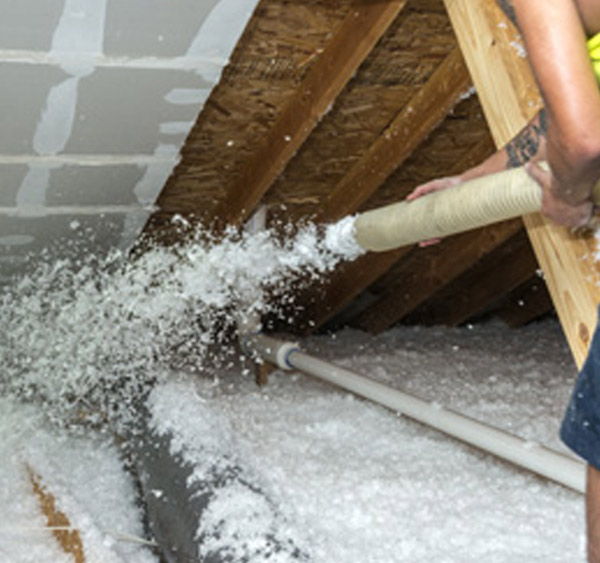
When measuring attic insulation, look for exposed framing, bare spots, low areas, or places where the insulation has shifted. ENERGY STAR’s Rule Your Attic program can also walk you through the process and help you compare your results with current recommendations.
If you prefer not to go into the attic yourself, you can schedule professional attic insulation services.
Why Depth Alone Isn’t the Whole Story
Homeowners often ask, “How much attic insulation do I need?” The answer depends on both the type of insulation and how thick it is.
Fiberglass, cellulose, and other materials have different R-values per inch. A ruler shows you the depth, but you also need to know the material and its rated R-value per inch to determine the total R-value.
Signs Your Attic Is Under-Insulated
Symptoms Homeowners Can Spot
You might spot signs of poor attic insulation before you ever look inside the attic.
Uneven temperatures are one clue. Upstairs rooms might feel much hotter in the summer or colder in the winter than the rest of your house.
Ice dams or unusually fast snowmelt can also indicate that heat is escaping through your ceiling and warming the roof. After winter storms, ice dams in Missouri may appear alongside uneven snowmelt on the roof.
Other signs include:
- Heating and cooling costs that rise faster than those of comparable nearby homes
- Visible floor joists or thin areas
- Insulation that has settled into uneven patches
- Insulation pushed away from soffits by wind
- Moisture-stained, compacted, or pest-disturbed insulation
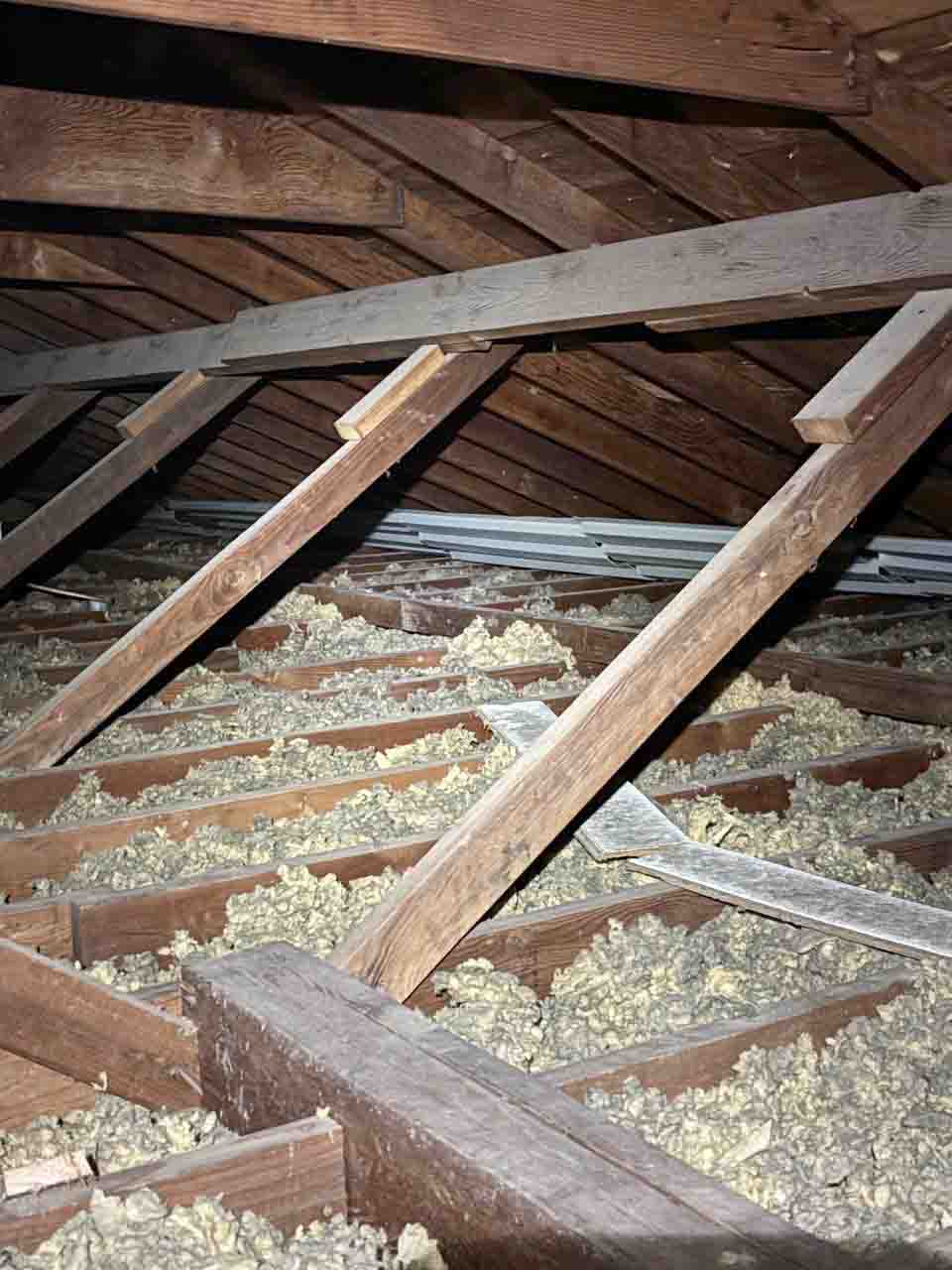
If you find insulation that is damaged by moisture or pests, have it professionally checked before adding more insulation.
Air Sealing Comes First
Check the attic floor for air leaks before adding more insulation. Heated or cooled air can escape through openings around wiring, plumbing, and the attic hatch, impacting how well the new insulation works.
ENERGY STAR estimates that homeowners can save approximately 15% on heating and cooling costs by air sealing and insulating attics, floors over crawl spaces, and basements.
Professional air sealing can address attic-floor gaps before more insulation is added.
Frequently Asked Questions
Measure First, Then Decide
The ruler test is a great way to start, but the old 12-inch benchmark no longer reflects current attic insulation targets. Check several areas, identify the insulation material, and look for thin spots, settling, moisture, gaps, or air leaks.
Once you know where your attic stands, The Hayes Company can provide a professional depth check and free estimate anywhere in the Kansas City metro area. To schedule an evaluation, call (816) 861-8700.