
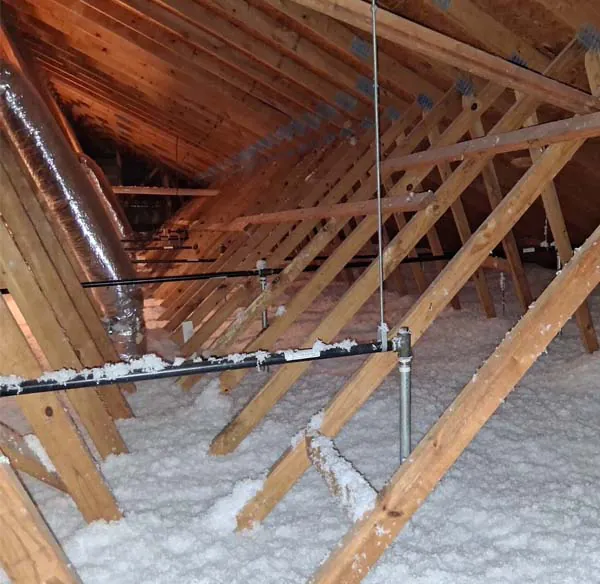
When homeowners think about insulation, the attic is the first place that comes to mind, and rightly so. But “insulate the attic” is not one decision. There are three common approaches, and the right one depends on the home, not on a single product.
The U.S. Department of Energy notes that warm air naturally rises, which is why the University of Missouri Extension calls the attic or roof the first priority for insulation in a Missouri home. An attic that is thin on insulation or full of air leaks quietly drives up heating and cooling costs season after season, forcing your HVAC system to work harder throughout the year.
If you’re looking for attic insulation Kansas City homeowners can rely on, it helps to understand how much insulation your home needs and which installation method makes the most sense. This guide explains Kansas City’s climate zone requirements and breaks down three common approaches to help you determine the right fit for your home.
Kansas City sits in IECC Climate Zone 4A. ENERGY STAR recommends R-60 attic insulation for an uninsulated attic in this zone, and Kansas City has adopted the 2021 International Energy Conservation Code as its energy code. Three common methods reach that target: blown-in fiberglass adds R-value quickly; blown-in fiberglass combined with air sealing also stops the air leakage that fiberglass alone cannot; and spray foam applied to the underside of the roof deck creates an air-sealed, conditioned attic. The best choice depends on the attic’s current condition, the roof type, and whether air leakage or low R-value is the bigger problem.
How Much Attic Insulation a Kansas City Home Needs (Climate Zone 4A)
All of Kansas City falls within Climate Zone 4A, which is classified as a mixed-humid climate. The amount of insulation your home needs is based on this climate designation.
Insulation performance is measured by R-value, which represents a material’s resistance to heat flow. The higher the R-value, the better the insulation slows heat transfer into and out of the home.
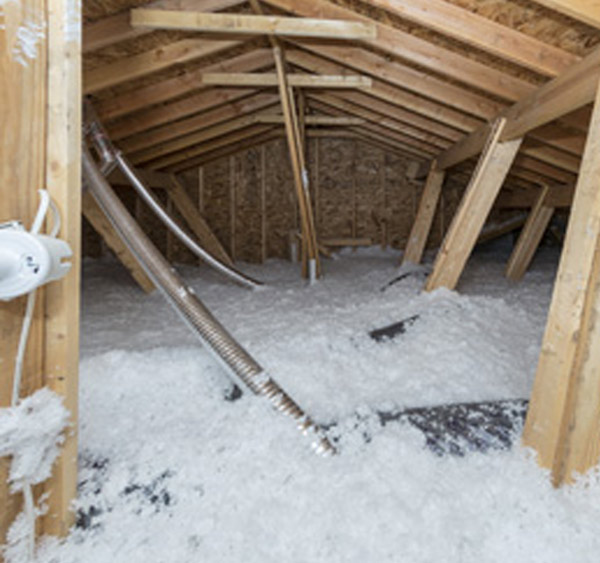
For homes in Climate Zone 4A, ENERGY STAR currently recommends R-60 attic insulation. While older Missouri guidance recommended insulating existing attics to at least R-49, R-60 is now the preferred target to maximize energy efficiency and comfort.
Local requirements matter as well. Missouri does not have a statewide residential energy code, so energy requirements are determined by individual jurisdictions. Kansas City has adopted the 2021 IECC Kansas City energy code, which increased attic and ceiling insulation requirements compared to older code editions.
This is especially important for older homes. Many houses built before recent code updates fall well below today’s recommended insulation levels. Reaching an attic R-value of 60 requires substantial insulation depth, which is why proper installation and uniform coverage are critical. Even small gaps or uneven distribution can reduce overall performance. As a depth reference: fiberglass batt insulates at roughly R-3.2 per inch and loose-fill cellulose at about R-3.7 per inch, so reaching R-60 takes substantial depth — another reason professional installation to an even, uniform layer matters.
If you’ve ever wondered how much attic insulation do I need, the answer depends on your current insulation level, but many older homes benefit significantly from upgrading toward today’s recommended standards.
The Three Ways to Insulate an Attic
There is no single best insulation method for every attic. Understanding the strengths of each approach can help you choose the right solution.
Blown-In Fiberglass
Blown-in fiberglass attic insulation is one of the fastest and most cost-effective ways to add R-value to an attic floor.
Loose-fill fiberglass is installed using specialized equipment that distributes insulation evenly across the attic surface. Professional installation is important because proper density and coverage help ensure the insulation performs as intended.
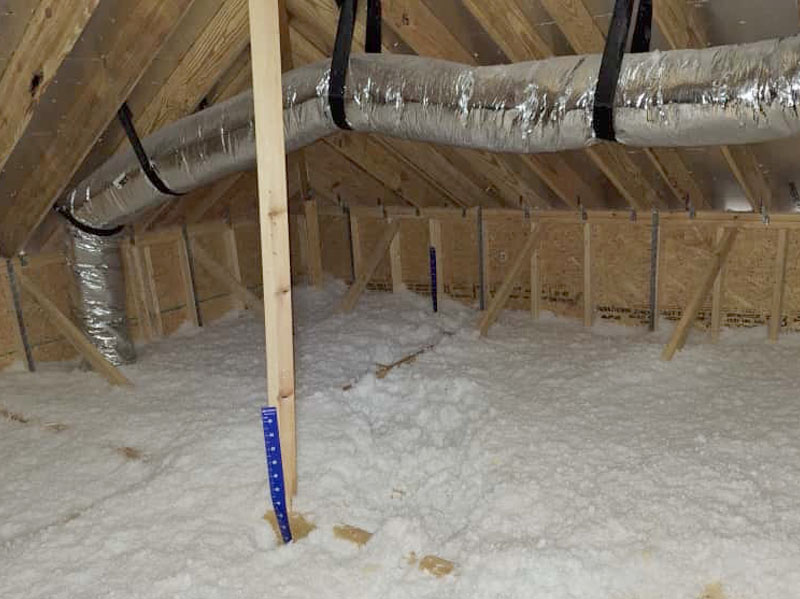
The primary benefit of blown-in insulation for Kansas City homeowners is its ability to quickly increase attic R-value without major construction or disruption. This method is often ideal for homes where the main issue is simply insufficient insulation depth.
Blown-In Fiberglass With Air Sealing
While fiberglass insulation slows heat transfer, it does not stop air movement by itself. The Department of Energy notes that blanket and loose-fill products cannot provide an air seal the way two-part spray foam can.
That’s why many homes benefit from combining new insulation with attic air sealing. Before adding insulation, installers seal common leakage points around plumbing penetrations, electrical wiring, recessed lighting, top plates, and other openings in the attic floor.
By addressing both heat transfer and air leakage, this approach can significantly improve comfort and efficiency. ENERGY STAR estimates homeowners can save approximately 15% on heating and cooling costs by air sealing and adding insulation in key areas such as attics, basements, and floors over crawl spaces.
This method is often the best choice for older homes, drafty rooms, and situations where utility bills remain high despite existing insulation.
Spray Foam at the Roofline
Instead of insulating the attic floor, spray foam attic insulation roofline applications place insulation directly on the underside of the roof deck.
Spray foam expands after installation, filling cracks, gaps, and hard-to-reach spaces while creating an effective air barrier. Both open-cell and closed-cell foam products can be used, depending on the design requirements of the home.
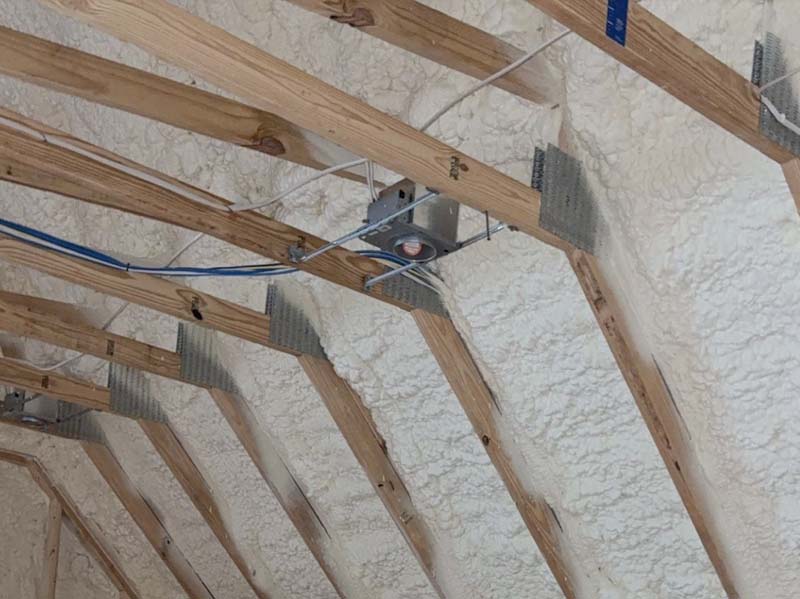
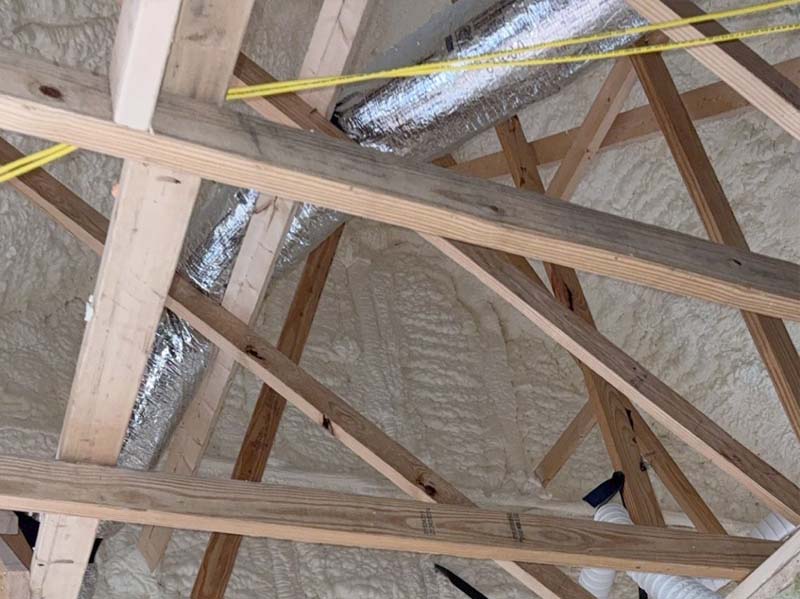
When insulation is moved to the roofline, the attic becomes a spray-foam sealed, conditioned attic space. This approach can be especially beneficial when HVAC equipment or ductwork is located in the attic, since those systems are brought inside the home’s thermal envelope.
Roofline spray foam is also a strong option for complex roof designs and situations involving vaulted ceilings. In fact, this same approach is often recommended when insulating vaulted and cathedral ceilings, where limited space makes traditional insulation methods more challenging.
How to Choose the Right Attic Method for Your Home
One of the biggest misconceptions about Missouri attic insulation is that there is a single best product for every home. In reality, there is no single “best” attic insulation. There is only the best method for a particular attic.
A few questions can help determine the right approach:
What Is Currently in the Attic?
If insulation levels are simply too low, blown-in fiberglass attic insulation may be the most efficient way to add R-value and improve performance.
Is the Home Drafty?
If some rooms feel uncomfortable, temperatures vary throughout the house, or energy bills seem unusually high, air leakage may be the larger issue. In those cases, combining insulation with air sealing often delivers better results.
What Type of Roof and Attic Does the Home Have?
Complex rooflines, vaulted ceilings, finished attic spaces, or attic-mounted HVAC systems often make roofline spray foam a worthwhile consideration. Creating a conditioned attic can improve overall efficiency and help protect HVAC equipment from extreme temperatures.
Because every attic is different, the best place to start is with a professional inspection or energy assessment. Measuring existing insulation levels and identifying air leaks provides the information needed to choose the most effective solution.
Frequently Asked Questions
Improve Your Attic’s Performance With Hayes Insulation
The attic is often the biggest opportunity to reduce energy loss and improve comfort in a Kansas City home. Whether the right solution is blown-in fiberglass attic insulation, insulation combined with attic air sealing, or a spray foam roofline system, the best approach depends on the home itself rather than any single product.
The Hayes Company can evaluate your attic, identify opportunities for improvement, and recommend the insulation solution that best fits your home’s needs.
References
ENERGY STAR. “Recommended Home Insulation R–Values.” U.S. Environmental Protection Agency, www.energystar.gov/saveathome/seal_insulate/identify-problems-you-want-fix/diy-checks-inspections/insulation-r-values.
ENERGY STAR. “Methodology for Estimated Energy Savings from Sealing and Insulating.” U.S. Environmental Protection Agency, www.energystar.gov/saveathome/seal_insulate/methodology.
U.S. Department of Energy. “Types of Insulation.” Energy Saver, www.energy.gov/energysaver/types-insulation.
U.S. Department of Energy. “Where to Insulate in a Home.” Energy Saver, www.energy.gov/energysaver/where-insulate-home.
U.S. Department of Energy. “Insulation.” Energy Saver, www.energy.gov/energysaver/insulation.
University of Missouri Extension. “E3A Home Energy: Attic and Ceiling Insulation.” University of Missouri, extension.missouri.edu/media/wysiwyg/Extensiondata/Pub/pdf/energymgmt/em0115.pdf.
City of Kansas City, Missouri. “Energy Code Update.” City Planning and Development Department, www.kcmo.gov/city-hall/departments/city-planning-development/energy-code-update.