

Missouri winters hit harder than many people expect. Average January temperatures hover around 30°F, and long stretches dip well below freezing. Every part of the state deals with icy conditions, so homes need real preparation to stay warm and keep energy bills under control. Waiting until after the first cold snap makes problems more complicated to fix and can drive heating costs way up.
Whether you’re a homeowner trying to stop drafts or a builder creating tighter, more efficient homes, a few focused upgrades will help your property hold heat, reduce waste, and stay comfortable through the Midwest’s most brutal weather.
Below are five smart strategies that make an immediate impact.
1. Schedule a Furnace Tune-Up Before Winter Hits
Your heating system works harder than any other appliance during winter. Unlike an air conditioner which cycles on and off, a furnace runs continuously for months. A quick maintenance call before temperatures drop can prevent mid-season failures and keep the system running efficiently.
A tune-up offers clear benefits:
- Lower heating bills by up to 10%
- Reduced breakdown risk on freezing nights
- Better airflow and more consistent heat
During a standard service appointment, technicians typically clean the burner and flue, check belts and motors, test safety controls, and replace the air filter. Throughout winter, plan to check that filter every month or two. A clean filter keeps air moving freely, which helps the furnace run efficiently and maintain steady heat.
A simple annual tune-up goes a long way toward keeping a Missouri home safe, warm, and dependable all season.
2. Seal Air Leaks in the Home’s Exterior Envelope
After servicing the furnace, the next priority is keeping the heat you pay for inside the home. Warm air naturally rises, and without proper air sealing, it escapes through countless small gaps in the building envelope. Reducing leaks is one of the most cost-effective ways to improve comfort and reduce heating costs.
Start with the attic, since it’s a significant source of heat loss. Seal openings where heated air flows into the attic, such as gaps around pipes, chimneys, recessed lights, and access hatches. Use fire-safe caulk or foam for small gaps, and add weatherstripping to the attic door to prevent warm air from rising. By preventing air leaks, your insulation will work better and keep warm air inside where it belongs.
Windows and doors are another primary source of drafts. If you can feel cold air or see daylight around the frames, install weatherstripping or apply caulk to tighten the seal and cover cracks. Properly sealed openings keep cold air out and help the furnace maintain consistent temperatures.
Electrical outlets and switches on exterior walls are often overlooked, but can also be a source of air leaks. Foam gasket inserts under the cover plates offer a quick, inexpensive fix. As a quick DIY fix, many Missouri hardware stores sell pre-cut outlet insulating pads.
Fireplaces can also leak significant heat. Make sure the damper is fully closed when not in use , as an open chimney flue essentially serves as a hole to the outside and siphons heated air away from the home. You may also consider a chimney cover to prevent warm air from being drawn out.
Finally, check the basement rim joists and sill plates, where framing meets the foundation. Seal gaps with caulk or expanding foam to keep cold air from seeping into the home if the property has a crawl space, and close foundation vents for winter unless a contractor advises otherwise for moisture control.
Once these areas are sealed, the furnace doesn’t have to work as hard to keep the home warm. Air sealing combined with insulation upgrades is named by the U.S. Department of Energy as a way to significantly improve comfort and reduce energy waste. It remains one of Missouri’s most effective winter prep strategies.
3. Upgrade Insulation for Better Warmth and Energy Control
Insulation reduces heat transfer. It acts like a blanket, resisting the flow of heat through walls, ceilings, and floors. Many Missouri homes, especially older ones, fall short of modern insulation standards. Adding insulation is one of the most impactful improvements a homeowner or builder can make.
Adding more insulation, especially in the attic, reduces heat loss and lowers your energy bills. Properly insulating your home from the roof down keeps heat inside in winter and outside in the summer. However, be sure your attic insulation meets standards to perform its job effectively. Insulation is measured in R-value, or thermal resistance capability- the higher the R-value, the better the material resists heat flow. If your attic has only a few inches of older material with a low R-value, upgrading to meet recommended R-values can instantly improve comfort.
Missouri homes generally aim for:
- Around R-49 in attics
- Around R-18 in exterior walls
- Around R-25 over unheated crawl spaces or garages
- Around R-19 for crawl space walls
- Around R-11 for basement walls
- Around R-8 along slab-on-grade edges
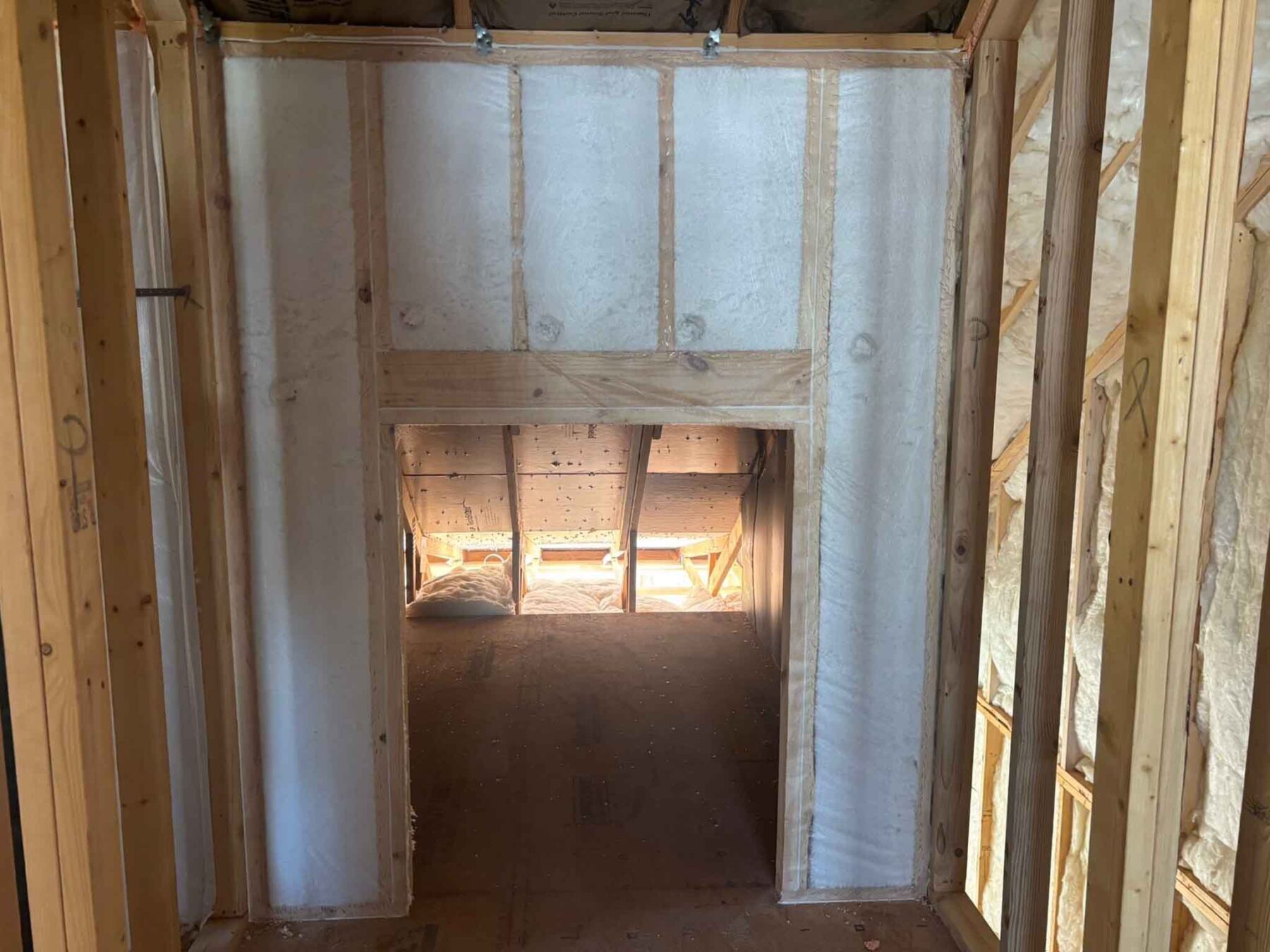
In attics, additional blown-in cellulose or fiberglass can dramatically increase R-value and comfort. Adding proper insulation is one of the most cost-effective upgrades a homeowner can make, as it often pays for itself through savings on heating bills within a few winters. For new construction, meeting or exceeding these targets helps ensure long-term energy savings and occupant comfort.
When speaking of insulation, don’t forget the ducts and hot-water pipes running through unconditioned spaces. Wrapping them with insulation prevents heat loss before air or water reaches the living areas. This small step helps systems work more efficiently during the coldest weeks of the year, keeping harsh Midwest winters out.
4. Install a Smart Thermostat and Use It Strategically
A smart thermostat is one of the simplest ways to cut winter heating costs without sacrificing comfort. These devices automatically adjust temperatures based on your schedule, routines, or even when you’re away from home. Instead of running your furnace at full power around the clock, the thermostat lowers the heat when you don’t need it and brings it back up before you return.
Temperature setbacks make a real dent in energy use. Dropping the thermostat by about 7–10°F for at least eight hours a day can trim heating bills by up to 10 percent. A cooler house loses heat more slowly, which means the furnace doesn’t have to cycle as often. Over a full Missouri winter, those reduced run times add up.
Smart thermostats also handle a lot of the fine-tuning for you. Many models learn your patterns over time or follow a programmed schedule. Others use motion sensors or phone location to detect when you’re away and automatically switch to an energy-saving mode. You stay warm when you’re home, and the system avoids unnecessary heating when you’re not.
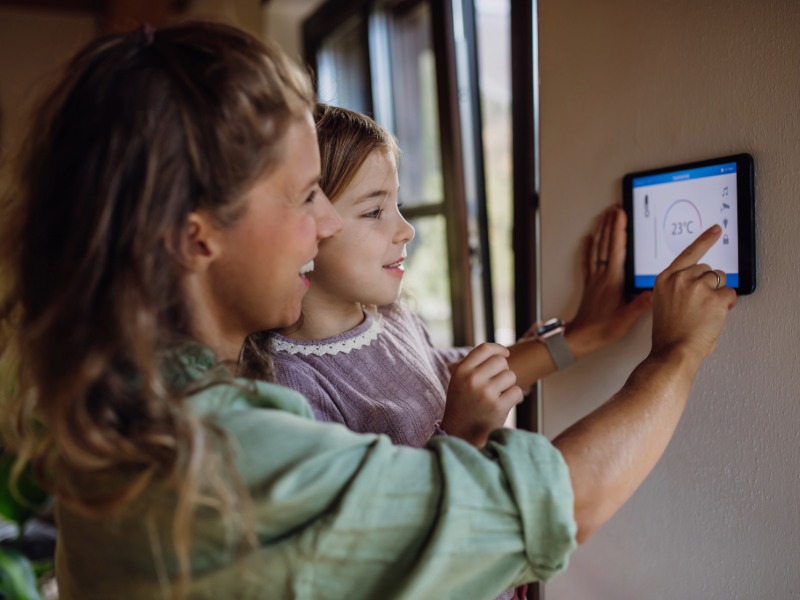
For most households, a daytime setting around 68°F strikes a good balance between comfort and efficiency. At night or when you’re away, many Missouri utilities suggest lowering the temperature to around 60°F, then adjusting as needed based on personal preference. Even small reductions can make a noticeable difference in your energy bill.
Be consistent with your settings to get the most out of the thermostat. Avoid big temperature jumps; blasting the heat to 80°F won’t warm the house faster and can waste energy. Slow, steady adjustments work far better. With a bit of planning and the right thermostat features, you can stay comfortable while keeping winter heating costs firmly under control.
5. Reverse Ceiling Fans to Circulate Warm Air
Ceiling fans aren’t just a summer tool. In winter, they can make a surprising difference in comfort and help your heating system work more efficiently. Warm air naturally rises and collects near the ceiling, leaving the living space below feeling cooler than it should. Reversing your ceiling fan helps push that trapped warmth back down where you actually need it.
Modern ceiling fans have a switch on the motor housing that flips the blade direction. Set the fan to run clockwise at a low speed during winter. This creates a gentle updraft that pulls cool air upward, pushes warm air outward from the ceiling, and circulates it down the walls and back into the room. The result is a more even temperature from floor to ceiling, making your thermostat setting feel warmer without increasing energy use.
This simple adjustment is especially effective in rooms with high ceilings, tall stairwells, or open foyers where warm air tends to get stuck overhead. Keeping the fan on a low setting is key, as you want slow, steady air movement, not a strong breeze.
It’s a no-cost, under-a-minute change that makes cold Missouri nights feel a lot more comfortable. One quick tip before switching directions: give the fan blades a quick dusting, since they often collect debris during the summer months.
These five strategies — furnace tune-ups, air sealing, insulation upgrades, smart thermostat use, and ceiling fan adjustments — significantly improve your Missouri home’s winter readiness. Taking these steps helps the property stay warmer, reduces strain on the heating system, and lowers monthly energy bills through the coldest part of the year. Even smaller habits, like letting sunlight warm the home during the day or layering up indoors, add extra comfort. Every bit helps when you’re trying to beat the Midwest cold.
A little preparation now makes getting through the entire winter easier. Tackle key improvements before temperatures drop to avoid mid-season stress and unnecessary heating costs. If you need help sealing air leaks or upgrading insulation, Hayes Company can evaluate your home and recommend the right improvements. Our Kansas City team is ready to help you stay comfortable, efficient, and winter-ready.
References:
Climate of Missouri. (n.d.). In Wikipedia. Retrieved from https://en.wikipedia.org/wiki/Climate_of_Missouri#:~:text=mean%20temperatures%20and%20precipitations%20from,2003%20%20Month%20Precipitation%20Temp
Independence Power & Light. (n.d.). Energy saving tips. City of Independence, Missouri. https://www.independencemo.gov/government/city-departments/power-and-light/energy-saving-tips#:~:text=,current%20storm%20windows%20if%20necessary
Missouri Public Service Commission. (n.d.). No cost winter energy saving tips. https://psc.mo.gov/General/No_Cost_Winter_Energy_Saving_Tips#:~:text=,If%20in
U.S. Department of Energy. (n.d.). Programmable thermostats. Office of Energy Efficiency & Renewable Energy. https://www.energy.gov/energysaver/programmable-thermostats#:~:text=Thermostat%20Operation
U.S. Department of Energy. (n.d.). Programmable thermostats: Winter setback benefits. Office of Energy Efficiency & Renewable Energy. https://www.energy.gov/energysaver/programmable-thermostats#:~:text=During%20winter%2C%20the%20lower%20the,have%20at%20the%20higher%20temperature
U.S. Department of Energy. (n.d.). Programmable thermostats: Proper operation. Office of Energy Efficiency & Renewable Energy. https://www.energy.gov/energysaver/programmable-thermostats#:~:text=Avoid%20setting%20your%20thermostat%20at,cooling%20and%2C%20therefore%2C%20unnecessary%20expense
University of Missouri Extension. (n.d.). GH4881: Insulation for Missouri homes. https://extension.missouri.edu/publications/gh4881#:~:text=Heat%20flows%20naturally%20from%20warmer,the%20interior%20of%20a%20house
University of Missouri Extension. (n.d.). GH4881: Air sealing benefits. https://extension.missouri.edu/publications/gh4881#:~:text=Many%20hardware%20stores%20and%20lumberyards,to%20use%20caulk%20or%20sealant
University of Missouri Extension. (n.d.). GH4881: Fireplace damper maintenance. https://extension.missouri.edu/publications/gh4881#:~:text=When%20the%20fireplace%20is%20not,escape%20until%20you%20close%20it
University of Missouri Extension. (n.d.). GH4881: Home insulation benefits. https://extension.missouri.edu/publications/gh4881#:~:text=You%20can%20reduce%20your%20home%E2%80%99s,make%20your%20home%20more%20comfortable
University of Missouri Extension. (n.d.). GH4881: Proper insulation importance. https://extension.missouri.edu/publications/gh4881#:~:text=To%20maintain%20a%20comfortable%20temperature%2C,and%20effective%20heat%20flow%20resistance
University of Missouri Extension. (n.d.). GH4881: Recommended R-values for Missouri homes. https://extension.missouri.edu/publications/gh4881#:~:text=%23%20Recommended%20R,homes
University of Missouri Extension. (n.d.). GH5981: Furnace maintenance benefits. https://extension.missouri.edu/publications/gh5981#:~:text=Furnace%20maintenance
University of Missouri Extension. (n.d.). GH5981: Furnace tune-up procedures. https://extension.missouri.edu/publications/gh5981#:~:text=If%20your%20furnace%20is%20fired,recommended%20in%20your%20owner%27s%20manual
University of Missouri Extension. (n.d.). GH5981: Air filter maintenance. https://extension.missouri.edu/publications/gh5981#:~:text=There%20are%20several%20things%20you,of%20dust%2C%20lint%20and%20litter
University of Missouri Extension. (n.d.). GH5981: Duct insulation. https://extension.missouri.edu/publications/gh5981#:~:text=tape
Washington University in St. Louis Office of Sustainability. (n.d.). 5 tips to conserve energy in the winter months. https://sustainability.wustl.edu/5-tips-to-conserve-energy-in-the-winter-months/#:~:text=Using%20external%20temperatures%20is%20a,you%20save%20on%20energy%20costs
Washington University in St. Louis Office of Sustainability. (n.d.). Winter energy conservation: Ceiling fans. https://sustainability.wustl.edu/5-tips-to-conserve-energy-in-the-winter-months/#:~:text=3